Chimney Repair in Brookfield, CT: How to Spot Problems Before They Become Dangerous
Chimney damage can create more than an exterior maintenance problem. Cracked masonry, a damaged flue liner, or a blocked chimney can affect how safely smoke and combustion gases leave your home. Water intrusion can also damage brickwork and mortar over time. For homeowners in Brookfield, Connecticut, recognizing visible warning signs can help identify when professional chimney repair is needed. You can make a few observations from the ground and inside a cold fireplace, but a professional inspection is necessary to assess hidden damage and determine the right repair.
Before You Start: Look for Visible Warning Signs
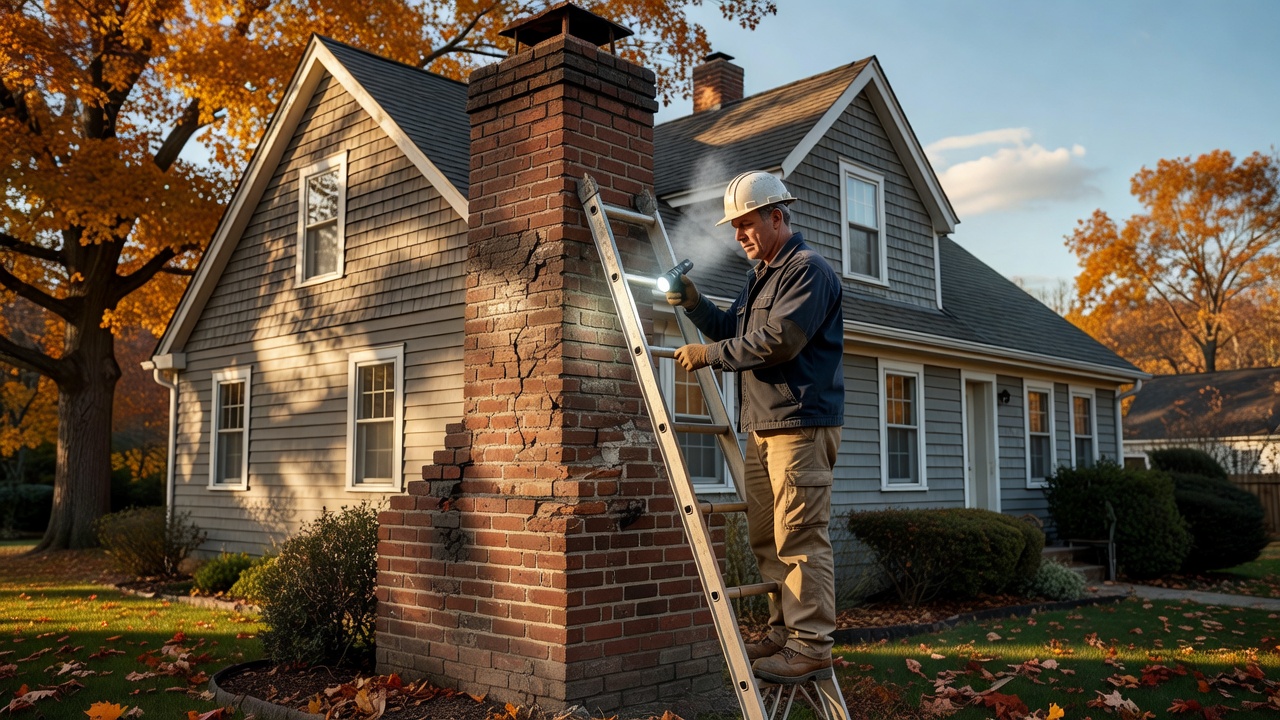
Begin by looking at the chimney from the ground. Use binoculars if you need a closer view, but do not climb onto the roof or use a ladder to inspect the chimney yourself.
Look for obvious signs of deterioration, including:
Missing or visibly damaged chimney caps.
Cracked or missing mortar between bricks.
Brick faces that are flaking, crumbling, or breaking away.
Cracks or damaged sections near the chimney crown.
White deposits on exterior masonry, which may indicate moisture movement through the brickwork.
These signs do not all indicate the same problem. White staining, for example, may be efflorescence, a deposit of salts left behind as moisture moves through masonry. It can indicate a moisture issue, but further assessment is needed to identify the source.
If you also want to look inside the fireplace, make sure it is completely cold and no longer in use. Use a flashlight to observe accessible areas without removing components or reaching into the flue. Do not use the fireplace if you suspect structural damage or another safety problem.
Step 1: Check the Firebox for Cracks and Deterioration
The firebox is the chamber where a fireplace fire burns. Its walls and joints are exposed to repeated heating and cooling, which can contribute to deterioration over time.
From a safe position, look for:
Cracked or crumbling mortar joints.
Broken or displaced firebrick.
Missing pieces of refractory material.
Signs of unusual heat damage or smoke escaping through joints.
Not every small crack means the fireplace is immediately unsafe, and there is no single crack-width measurement that determines whether a repair is necessary in every situation. The location, depth, and condition of the surrounding materials all matter.
If bricks have shifted, sections are missing, or you suspect heat has damaged surrounding materials, stop using the fireplace until a qualified chimney professional assesses it. Do not attempt to patch a firebox with ordinary mortar or an unapproved repair product.
Step 2: Inspect the Damper
The damper helps control the opening between the firebox and the flue. When the fireplace is not in use, a functioning damper can also help limit unwanted airflow through the chimney.
With the fireplace completely cold, you may be able to observe the damper from the firebox. Look for obvious rust, deformation, missing parts, or signs that the mechanism is not operating properly. Do not force a stuck damper or reach into areas you cannot see clearly.
A damper that does not open correctly can interfere with fireplace operation. One that does not close properly may allow unwanted air to move through the chimney when the fireplace is not in use.
If the damper is stuck, visibly damaged, or cannot be operated normally, arrange an assessment before using the fireplace. A technician can determine whether adjustment, repair, or replacement is appropriate.
Step 3: Have the Flue Liner Professionally Inspected
The flue liner runs through the chimney and helps contain combustion gases while protecting the surrounding structure from heat and combustion byproducts. Depending on the system, the liner may be made from clay tile, metal, or another suitable material.
Cracks, gaps, displaced sections, or deterioration can compromise the system. However, the full length of the liner generally cannot be assessed from the firebox opening alone.
The Chimney Safety Institute of America (CSIA) recommends annual chimney inspections, with cleaning and repairs performed when necessary. A professional will determine the appropriate inspection level based on the chimney’s condition and circumstances. A more detailed inspection, often including an internal video scan, may be needed when damage is suspected.
If a chimney fire has occurred or you suspect one took place, do not use the fireplace again until the chimney has been professionally evaluated. Damage may include cracked clay tiles, failed mortar joints, or distorted metal components that are not visible from below.
Step 4: Check the Chimney Crown and Cap From the Ground
The chimney crown covers the top of a masonry chimney around the flue openings and helps direct water away from the masonry. The chimney cap helps keep rain, leaves, and animals from entering the flue.
From the ground, use binoculars to look for visible cracks, missing sections, a displaced cap, or other obvious damage. Do not climb onto the roof to investigate.
Water entering through a damaged crown or other defective areas can contribute to masonry deterioration. In cold weather, moisture that enters cracks may freeze and expand, potentially making existing damage worse.
If the chimney appears to have no cap, or the cap looks damaged or displaced, ask a chimney professional whether replacement or repair is appropriate. The correct cap depends on the chimney and venting system, so it should not be selected by appearance alone.
Step 5: Look for Deteriorating Mortar and Brickwork
Exterior masonry can deteriorate as mortar weathers and moisture enters the brickwork. Look from the ground for gaps in mortar joints, crumbling material, cracked bricks, or brick faces that appear to be breaking away.
A process called spalling occurs when the surface of a brick or masonry unit breaks or flakes off. Moisture can contribute to this problem, although the underlying cause should be assessed before repairs begin.
Tuckpointing involves removing deteriorated mortar from joints and replacing it with suitable new mortar. The replacement material needs to be compatible with the existing masonry. Using mortar that is too hard or otherwise unsuitable can cause additional damage rather than solve the problem.
If you see significant mortar loss, loose bricks, or sections that appear unstable, keep away from the affected area and arrange a professional assessment. Chimney masonry repairs may involve more than filling visible gaps; the contractor should identify and address the source of the deterioration.
Step 6: Address Creosote Buildup
Creosote is a combustible deposit produced by burning wood. It can accumulate inside the flue and contribute to chimney fires if it is not removed when necessary.
The amount and condition of creosote depend on factors such as wood moisture, burning practices, and the operation of the fireplace or stove. Heavy or glazed deposits may require specialized cleaning methods. The appropriate approach should be determined by a qualified chimney professional.
The CSIA recommends annual inspections and professional cleaning when needed. Chemical cleaning products should not be used as a substitute for inspection and mechanical cleaning.
Do not attempt to remove creosote by climbing onto the roof or using improvised tools. If you notice substantial deposits or suspect a chimney fire, stop using the fireplace and arrange professional evaluation.
Step 7: Know When to Call a Chimney Professional
Homeowners can observe visible warning signs, but repairs involving the liner, firebox, crown, damper, or structural masonry require appropriate expertise.
Arrange a professional inspection if you notice significant cracks, loose masonry, suspected liner damage, heavy creosote buildup, or signs of water intrusion. If you suspect a chimney fire, stop using the system and have it evaluated before lighting another fire.
Some chimney repairs may require a permit or inspection under local requirements. Brookfield’s Building Department administers the Connecticut State Building Code and provides information through its online permit center. Ask the department whether your specific repair requires a permit before work begins.
When choosing a contractor, ask about relevant experience, insurance, professional credentials, and the scope of the proposed repair. Request a written estimate and an explanation of the findings that support the recommended work.
Troubleshooting: What If Smoke Backs Up Into the Room?
Smoke entering the living space can indicate a draft problem, an obstruction, a damper issue, or another problem with the fireplace or venting system.
If smoke begins backing up into the room, stop adding fuel and discontinue use. Do not keep burning while trying improvised fixes, such as warming the flue with burning newspaper. Have the cause assessed before using the fireplace again.
If a carbon monoxide alarm sounds or anyone experiences symptoms that could indicate carbon monoxide exposure, get everyone outside immediately and call 911 from a safe location. Do not delay evacuation to investigate the chimney or ventilate the home.
A chimney professional can assess potential causes and determine whether cleaning, repairs, or further testing is needed.
Schedule Chimney Repair in Brookfield, CT
Visible cracks, deteriorating mortar, a damaged cap, or signs of moisture intrusion can be reasons to arrange a professional assessment. Addressing the cause early may help prevent further deterioration, but the appropriate repair depends on the chimney’s actual condition.
Homeowners in Brookfield can consult the CSIA’s homeowner resources to learn about chimney safety and professional inspections. When choosing a service provider, confirm its service area, credentials, insurance, and experience with the type of repair your chimney needs.
The original draft mentions Garden City Chimney Service and America’s Chimney Experts. Confirm directly with each company whether it serves Brookfield, CT, before presenting either as a local provider. You can also contact a chimney company that explicitly lists Brookfield among its service areas.
A professional inspection can help you understand the condition of your chimney, prioritize repairs, and make a more informed decision about using your fireplace safely.
Related from Chimney Experts: Chimney Sweep CT · Chimney Inspection CT · Getting a Chimney Inspection in Easton