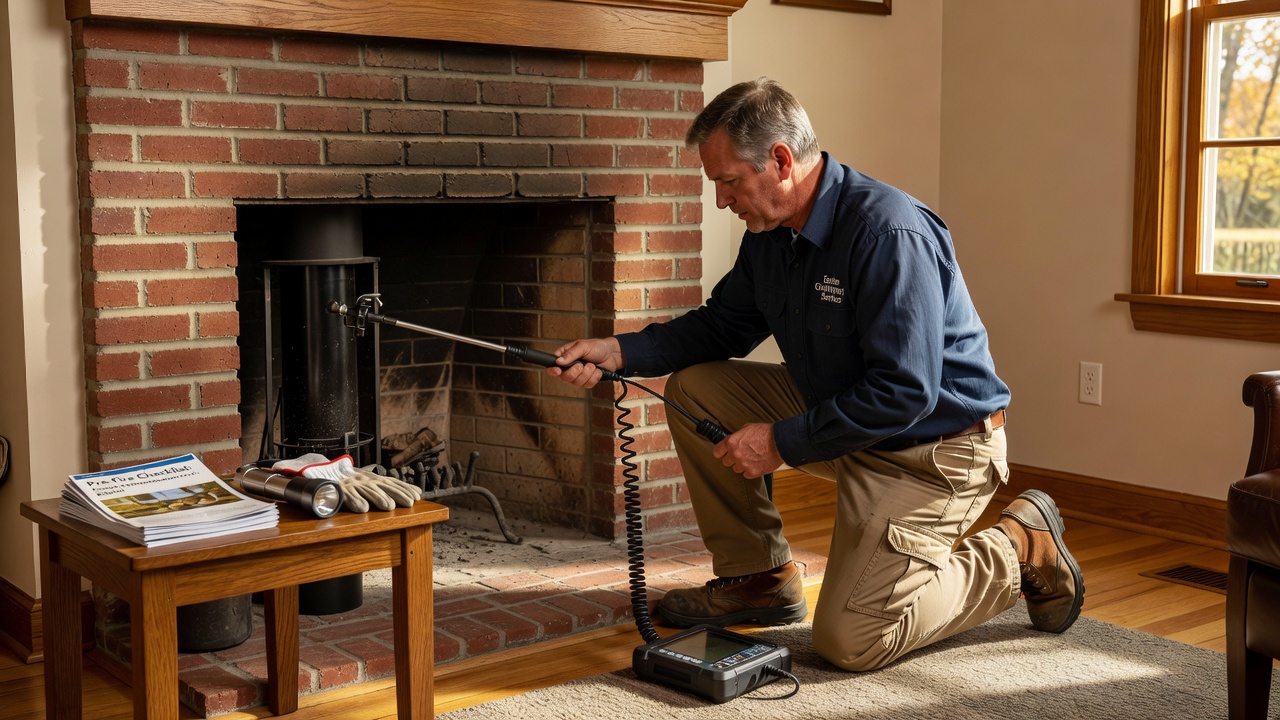
Getting a Chimney Inspection in Easton: What to Do Before You Light the First Fire
Most chimney fires don’t announce themselves. One evening everything seems fine; the next morning you’re looking at a cracked flue liner or worse. In Easton, where a lot of homes run on wood heat through a Connecticut winter that regularly drops below zero, skipping a chimney inspection isn’t a minor oversight it’s the kind of decision that can put your family at risk. Here’s how to approach getting your chimney properly inspected, so you know exactly what you’re dealing with before the burning season starts.
Before You Start
Know what you have. Easton has a mix of older colonials and newer builds scattered across Sandy Hook Road, Sport Hill Road, and the back roads off Route 136. Older homes often have clay tile flue liners that were installed decades ago; some haven’t been looked at since. Newer homes sometimes have factory-built fireplaces with metal liners that have their own inspection requirements. The type of system you have determines what the inspector is looking for, so before anyone shows up, locate your fireplace or stove manual if you have it and know roughly when the system was last serviced.
Also be honest about usage. If you burned four or five cords last winter, that’s different from lighting a few fires at Christmas. Heavy use accelerates creosote buildup and wear on the refractory components.
Step 1: Understand the Level of Inspection You Need
The Chimney Safety Institute of America (CSIA) and NFPA 211 both define three levels of inspection. A Level 1 is the annual standard a visual check of the accessible parts of the firebox, smoke chamber, and exterior. If you’ve been using the system without any changes and nothing unusual happened, that’s typically what you need.
A Level 2 kicks in when something has changed: you sold or bought the house, switched fuel types, had a chimney fire, or there’s been structural damage. This includes a video scan of the flue interior. A Level 3 is invasive and only happens when serious hidden damage is suspected.
For most Easton homeowners scheduling a fall inspection, a Level 2 is often the smarter call especially on older properties where the last inspection date is unknown. It costs more than a Level 1, but a video scan is the only reliable way to see cracks, spalling, or deteriorated mortar joints inside the flue where the real risk lives.
Step 2: Choose a CSIA-Certified Inspector
Certification matters here. A CSIA-certified chimney sweep has passed a written exam and is required to stay current with code changes. When you’re calling around, ask directly whether the technician who shows up not just someone at the company holds that certification. It’s a fair question and any legitimate shop will answer it without hesitation.
Word of mouth from neighbors still works well in a town like Easton. You can also check professionals through the CSIA’s online directory. Companies like Garden City Chimney Service and Roosevelt Chimney are examples of established Connecticut chimney companies serving Fairfield County homeowners.
Step 3: Clear Access and Prepare the Fireplace
This sounds obvious but we see it on jobs all the time homeowners schedule an inspection, and the hearth area is stacked with firewood, the damper handle is stuck, or there’s a decorative screen bolted in place that nobody has moved in years. A stuck damper isn’t just an inconvenience; it tells the inspector something about the condition of the throat and smoke shelf immediately.
Clear everything from the hearth. Remove any glass doors if they come off easily. Make sure the inspector can get onto the roof safely which in Easton means thinking about the pitch. A lot of homes here have steeper rooflines than you’d find closer to the coast, and the inspector may need additional equipment. Let them know when you book.
Step 4: Be Present During the Inspection
Don’t just hand over a key. Walk through it with the technician. A good inspector will explain what they’re seeing as they go, and that’s genuinely useful information not a sales pitch, just context. If there’s a hairline crack in the flue tile, seeing the video footage and having it explained to you is far more valuable than reading it in a report later.
Ask about creosote stage. First-degree creosote (dusty, flaky deposits) sweeps out easily. Second-degree is harder, glazed. Third-degree glaze is a serious hazard and requires chemical treatment before mechanical removal. Knowing where you stand helps you make an informed decision about what comes next.
Step 5: Review the Written Report
Any qualified inspection should produce a written report. NFPA 211 requires it for Level 2 inspections. Read it carefully. The report should identify deficiencies by location “crack in flue tile at approximately 12 feet above the smoke chamber,” not just “flue needs work.” Vague language in a chimney inspection report is a red flag.
If repairs are recommended, get a clear explanation of what each repair involves and why it matters for safety. Some things like a damaged rain cap are relatively minor and inexpensive. A compromised liner is a different conversation entirely and should be addressed before the system is used again.
Step 6: Schedule Any Needed Repairs Before Burning Season
Fairfield County’s heating season starts in earnest by late October. Chimney repair schedules fill up fast in September and early October. If your inspection turns up liner work, tuckpointing, or crown repairs, don’t wait. Masonry work also needs dry conditions and temperatures above freezing to cure properly, which narrows your window as fall progresses.
A chimney that passes inspection clean can go straight to sweeping if creosote levels require it. One that needs structural repair needs to stay cold until the work is done.
Step 7: Set a Reminder for Next Year
NFPA 211 recommends annual inspections for any chimney in use. Put it on the calendar for August or early September before the rush, before temperatures drop, and while there’s still time to address anything that comes up.
Troubleshooting Tip: If Your Damper Smells Like Smoke in Summer
A fireplace that pushes a smoky odor into the house during humid summer months isn’t just unpleasant it usually signals a creosote and draft problem that will be worse when you actually burn. It’s also one of the most common things Easton homeowners mention when they call. Don’t mask it with a chimney deodorant. Have the system inspected and swept. The smell is telling you something.
Ready to get your chimney inspected before winter sets in? Call Chimney Experts serving Easton and the surrounding Fairfield County area. We’ll give you a straight answer about what your system needs nothing more, nothing less.