Published November 4, 2026
What Professional Chimney Cleaning Costs in Newtown, CT and the Mistakes That Cost Homeowners More
Homeowners in Newtown, CT often expect a simple, flat price when they call for chimney cleaning. However, the final cost depends on several factors, including the type of fireplace, the amount of creosote inside the flue, the chimney’s accessibility, and what services are included.
A basic chimney sweep is different from a detailed inspection or a repair. Understanding those differences can help you compare estimates, recognize unnecessary add-ons, and choose a qualified contractor. Here is what Newtown homeowners should know about chimney cleaning costs and the mistakes that can make the job more expensive.
A Realistic Chimney Cleaning Price Range
For a standard chimney sweep with a basic visual inspection, homeowners can use approximately $150 to $300 as a general budgeting estimate. Actual prices in Newtown may fall outside that range depending on the chimney’s condition, the number of flues, the appliance type, and the scope of work.
A more involved appointment may cost more if it requires a Level 2 inspection with video scanning, specialized creosote removal, or additional services. Repairs such as liner replacement, masonry work, and flashing repairs should be quoted separately.
These figures are planning estimates, not a verified survey of Newtown contractor prices. Ask for a written quote that explains exactly what the service includes before scheduling.
The mistake is choosing a contractor based on the lowest advertised price without checking what is included. A low starting price may cover only a limited service rather than a complete cleaning and inspection.
What Actually Drives Chimney Cleaning Costs Up or Down?
Several factors influence the amount a chimney company charges. Understanding them makes it easier to compare estimates accurately.
Creosote buildup
Creosote forms when wood smoke cools and condenses along the inside of a chimney. It can appear as loose, flaky deposits, sticky or tar-like material, or hardened glazed buildup.
The type and amount of deposits affect the cleaning method and labor required. Ordinary brushing may be suitable for some deposits, while heavier or hardened material may require specialized equipment and professional techniques.
The Chimney Safety Institute of America (CSIA) explains that cleaning methods depend on the type of deposits present. Standard brushing is not equally effective against every form of creosote.
Homeowners who regularly burn wood should have the chimney inspected at least once a year so the technician can determine whether cleaning is necessary.
Time since the last cleaning
A chimney that receives regular maintenance may require less work than one that has gone several years without inspection or cleaning.
However, the number of years since the last appointment does not automatically determine the final price. The actual buildup, chimney design, and condition of the system matter more.
Even if you use your fireplace occasionally, annual inspection is still recommended. The technician can assess whether the chimney needs cleaning or other maintenance.
Flue length and chimney height
A tall chimney or a system with multiple flues may take longer to inspect and clean than a straightforward single-flue installation.
Accessibility also matters. Roof pitch, chimney location, and the equipment needed to reach the flue can affect labor and scheduling.
When requesting an estimate, explain the chimney’s configuration as accurately as possible. If you are unsure how many flues it has, mention that as well.
Type of appliance
Wood-burning fireplaces, wood stoves, oil-fired appliances, and gas fireplaces have different maintenance requirements.
Wood-burning systems can accumulate soot and creosote. Oil-fired systems may develop soot deposits that require appropriate inspection and cleaning. Gas appliances generally produce different combustion byproducts, but their venting systems still need inspection for blockages, damage, and proper operation.
Do not assume that every appliance needs the same cleaning procedure. Ask the contractor whether the quoted service is appropriate for your specific system.
Inspection level
NFPA 211 describes three levels of chimney inspection. The appropriate level depends on the system’s history and the reason for the inspection.
Level 1: Generally appropriate when the chimney and connected appliance have not changed and have been used under the same conditions. It covers readily accessible portions of the system.
Level 2: A more detailed inspection that includes accessible areas and a video scan of the chimney interior. It is recommended in circumstances such as a property sale, a change in appliance or fuel, or an event that may have damaged the chimney.
Level 3: May be necessary when a suspected hazard cannot be evaluated without accessing concealed portions of the chimney or surrounding structure.
A Level 1 inspection may be included with a routine cleaning, but this depends on the company’s service package. A camera inspection is not automatically included in every chimney sweep.
Additional repairs
An inspection may reveal problems that require work beyond ordinary cleaning. Examples include:
Cracked or deteriorating mortar joints
Damaged chimney crowns
Missing or damaged chimney caps
Failing roof flashing
Cracked or separated flue liners
Damaged dampers
These repairs are separate from sweeping. Ask the contractor to explain the finding, provide photographs when available, and give you a written estimate before authorizing additional work.
What’s Usually Included in Professional Chimney Cleaning?
A standard chimney cleaning appointment may include:
Removing soot and creosote deposits from the flue
Cleaning accessible firebox and smoke chamber areas, when included in the service
Checking readily accessible chimney components
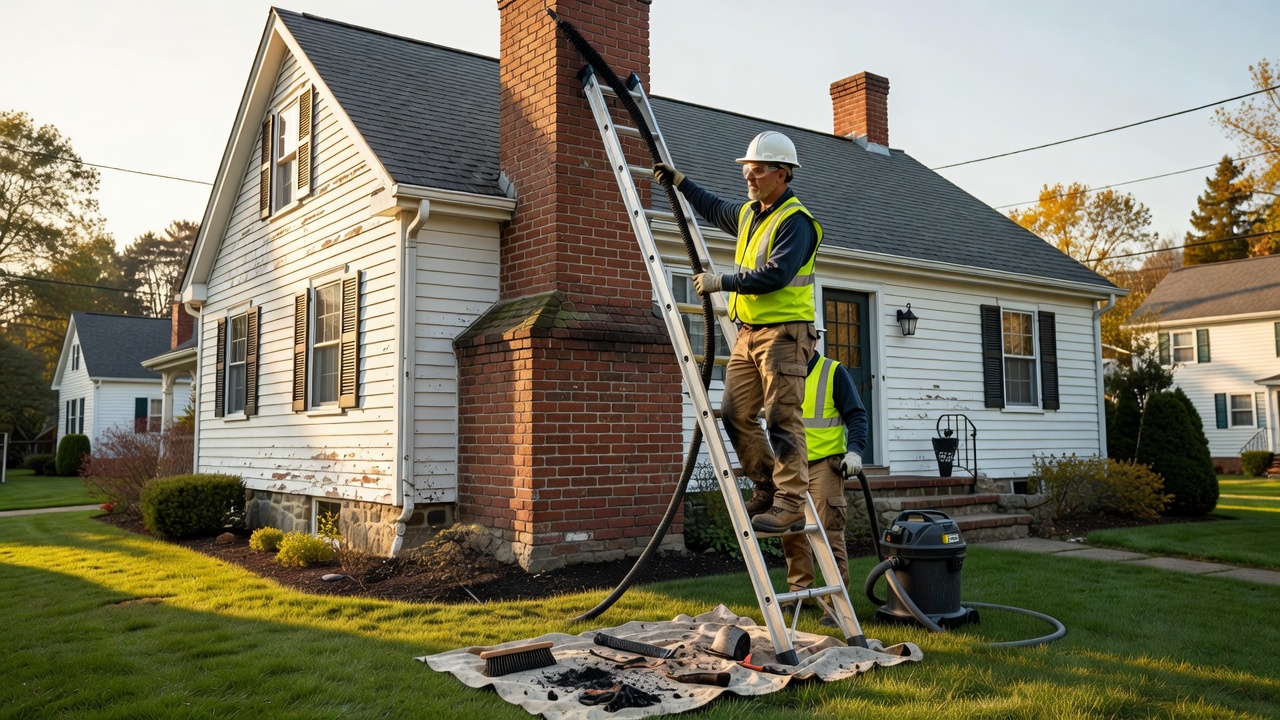
Using appropriate containment and vacuum equipment to control dust and debris
Cleaning the work area after the appointment
The exact scope varies by company and appliance type. Ask whether the quoted service includes a Level 1 inspection and whether the technician will provide a written report.
Services that may cost extra include:
Level 2 video inspection
Heavy or glazed creosote removal
Chimney cap replacement
Crown repairs
Flashing repairs
Masonry repointing
Flue liner repair or replacement
A reputable contractor should explain these differences before work begins.
Common Mistakes That End Up Costing More
Hiring based on price alone
A heavily discounted chimney cleaning advertisement may not include the same work as a full cleaning and inspection.
That does not mean every low-priced offer is dishonest. However, homeowners should ask what the price covers, whether an inspection is included, and whether additional charges may apply.
Be cautious if a contractor advertises an unusually low price but cannot explain the service in detail. Ask for the company’s business information, credentials, insurance, and written estimate before agreeing to the work.
Skipping annual inspections because the fireplace is rarely used
Using a fireplace only a few times each year does not eliminate the need for inspection. Creosote can still accumulate during occasional wood burning, while unused chimneys can develop other problems involving moisture, masonry, or animal entry.
The NFPA recommends annual chimney inspections, with cleaning and maintenance performed when necessary. This does not mean every chimney requires a full cleaning every year. The inspection helps determine what work is actually needed.
Waiting until something seems wrong
Visible smoke, unusual odors, or water stains can indicate a problem, but not every chimney defect produces an obvious warning.
A damaged liner or obstruction may remain hidden until a professional examines the system. Waiting for a noticeable problem can allow deterioration to continue.
If smoke repeatedly enters the room or you suspect a blockage or chimney defect, stop using the fireplace until it has been assessed. Maintain working smoke and carbon monoxide alarms in your home.
Assuming every cleaning includes a camera inspection
A routine sweep and a Level 2 inspection are not the same service. Some companies offer both as a package, while others price them separately.
If you are buying or selling a home, have changed appliances, or have experienced a chimney fire or another potentially damaging event, ask whether a Level 2 inspection is appropriate.
Get the inspection level and included services in writing before booking.
How to Avoid Overpaying for Chimney Cleaning
You do not need to choose the most expensive contractor to receive good service. You need to understand what each estimate covers.
Start by getting at least two quotes from qualified chimney companies. Ask each contractor:
Does the price include chimney sweeping and a Level 1 inspection?
Which parts of the chimney and appliance will be cleaned?
Is a video inspection included or priced separately?
Are there additional charges for multiple flues or difficult access?
Will the technician provide photographs and a written report?
What happens if the inspection identifies a repair?
Compare the scope of work rather than focusing only on the total price. A detailed estimate makes it easier to identify differences between companies.
It is also worth scheduling ahead. Fall is a popular period for chimney services because homeowners want their fireplaces ready before colder weather. Arranging an appointment during spring or summer can give you more flexibility, although availability and pricing vary by contractor.
Choosing a Qualified Chimney Contractor in Connecticut
Before hiring a chimney company, check its experience, credentials, and insurance.
CSIA certification is a useful professional credential to look for when comparing chimney sweeps. Ask whether the technician performing the work holds a current certification, and verify the credential through the organization’s website.
For residential repair work, Connecticut homeowners should also check whether the contractor needs Home Improvement Contractor registration through the Connecticut Department of Consumer Protection. Routine cleaning is treated differently from covered home improvement work, so do not assume the same registration requirement applies to every service.
You can verify applicable registrations through the state’s eLicense system.
A qualified contractor should be willing to explain the work, answer questions, and provide a written estimate before beginning additional repairs.
Schedule Your Chimney Cleaning Before Problems Grow
If your Newtown property is due for chimney cleaning or has not received a professional inspection recently, contact a qualified local chimney company. Ask about the inspection level, cleaning scope, and any additional charges before confirming the appointment.
Regular inspections help identify creosote buildup, blockages, and damage before they become more serious. A clear written estimate also helps you understand which services are necessary and which repairs can be planned separately.
The goal is not simply to find the cheapest chimney sweep. It is to hire someone who can explain the condition of your chimney, perform the appropriate work, and help you maintain the system safely.
Related from Chimney Experts: Chimney Sweep CT · Chimney Inspection CT · Chimney Repair CT