Published October 27, 2026
Chimney Inspection in Monroe, CT: Common Problems and What Actually Fixes Them
A chimney inspection in Monroe, CT, can help identify problems with the flue liner, firebox, chimney crown, and exterior masonry before they become serious safety concerns or expensive repairs. Some warning signs, such as crumbling mortar, damaged bricks, or smoke entering the room, are visible to homeowners. Other problems require specialized equipment and professional training to diagnose. Knowing what to look for can help you decide when to stop using your fireplace and call a qualified chimney professional. Regular inspections also help homeowners understand which repairs are necessary and which issues can be monitored.
What Does a Chimney Inspection Cover?
The Chimney Safety Institute of America (CSIA) describes three levels of chimney inspection.
A Level 1 inspection is generally appropriate when the chimney and connected appliance have not changed and there are no known conditions requiring a more detailed assessment. It covers accessible portions of the chimney and venting system.
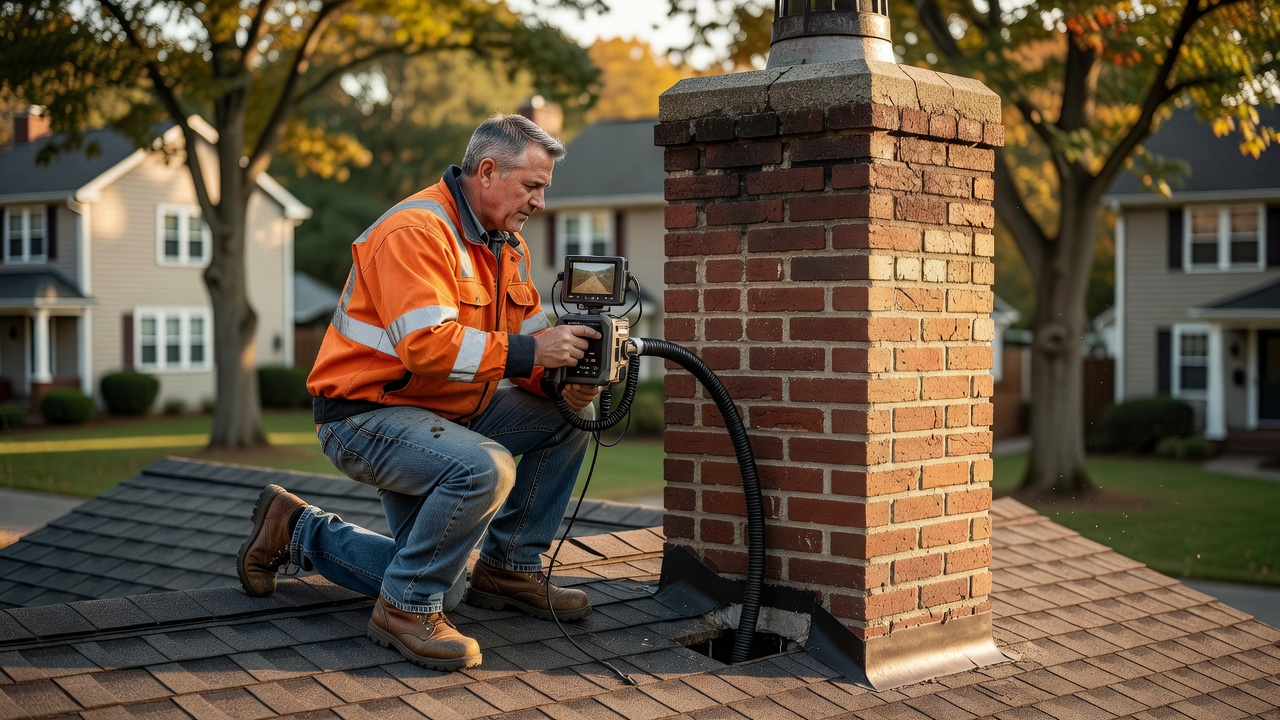
A Level 2 inspection includes a more detailed examination of accessible areas, along with an internal video scan or similar examination of the flue. It is appropriate in situations such as a property transfer, a change in appliance or fuel, a chimney fire, or suspected damage that requires further evaluation.
A Level 3 inspection may involve removing components of the chimney or surrounding structure to access concealed areas when a less invasive inspection cannot adequately assess a suspected hazard.
The CSIA recommends inspecting chimneys, fireplaces, and vents at least once a year. Cleaning and repairs should be performed when necessary, based on the inspection findings. Not every inspection requires a camera scan, and not every chimney needs annual cleaning.
Common Chimney Problems Around Monroe
1. Creosote Buildup Inside the Flue
Warning signs: A strong fireplace odor, visible dark deposits near the damper, or creosote flakes around the fireplace may indicate a buildup. However, odor alone cannot confirm how much creosote is present or whether a dangerous deposit has formed.
Possible causes: Creosote forms when wood combustion produces vapors that condense inside the flue. Burning unseasoned wood, smoldering fires, and operating conditions that keep flue temperatures low can contribute to buildup.
What fixes it: A qualified chimney sweep can inspect the flue and determine the appropriate cleaning method. Ordinary soot and creosote can often be removed with standard mechanical brushing. Hard or glazed deposits may require specialized professional treatment and additional mechanical cleaning.
Creosote sweeping logs and other chemical products do not replace a professional inspection or mechanical cleaning. The CSIA explains that loosened deposits still need to be removed from the chimney system.
How to reduce future buildup: Burn properly seasoned wood and follow the appliance manufacturer’s operating instructions. A moisture meter can help confirm that firewood has a moisture content below 20 percent. Arrange an annual inspection to determine whether cleaning is needed.
2. Cracked or Deteriorated Flue Liner
Warning signs: Visible cracks in clay tiles, missing pieces of liner, damaged joints, or evidence of smoke escaping through masonry may indicate a problem. Smoke backing up into the room can have several causes and should not be used as the sole way to diagnose liner damage.
Possible causes: Clay tile liners can deteriorate from repeated heating and cooling, moisture intrusion, structural movement, or a chimney fire. Metal liners can also be damaged or corroded, depending on the material and operating conditions.
What fixes it: The appropriate solution depends on the location and extent of the damage. A professional may recommend replacing isolated damaged sections, installing a compatible stainless steel liner, or using a suitable cast-in-place lining system. Extensive damage may require more substantial reconstruction.
Do not assume every crack requires complete relining or that every isolated defect can be repaired with a simple patch. A professional inspection should establish whether the liner can safely remain in service and which repair method is appropriate.
How to reduce future problems: Schedule annual inspections and arrange an additional assessment after a suspected chimney fire or other event that may have damaged the system. A Level 2 inspection may be appropriate when the condition cannot be adequately evaluated during a Level 1 inspection.
3. Spalling Brick and Deteriorating Mortar
Warning signs: Brick faces that flake or break away, gaps in mortar joints, crumbling masonry, or white deposits on the exterior can indicate moisture movement or deterioration. White staining, known as efflorescence, is associated with soluble salts carried to the surface by moisture, but it does not by itself establish the severity or source of a problem.
Possible causes: Water entering porous masonry can contribute to deterioration. Freezing and thawing can worsen existing damage, especially when masonry remains wet. Defective flashing, a damaged crown, or other water-entry points may also contribute.
What fixes it: A professional may recommend tuckpointing, replacing severely damaged bricks, repairing flashing, or addressing the source of water intrusion. The repair should match the condition of the masonry and use compatible materials.
Mortar selection matters, particularly in older brickwork. Mortar that is harder than the surrounding masonry can contribute to further damage. A contractor familiar with masonry repair should evaluate the existing materials before choosing a replacement mix.
How to reduce future problems: Keep the crown, cap, flashing, and mortar joints in suitable condition. Address water entry promptly rather than covering deteriorated masonry with an unsuitable sealant.
4. Damaged or Missing Chimney Cap
Warning signs: Leaves, animal nesting material, or moisture in the fireplace may indicate a damaged cap, an opening at the top of the chimney, or another source of water or debris.
Possible causes: Metal caps can corrode, screens can become damaged, and severe weather can loosen components. The lifespan depends on the material, installation, and exposure.
What fixes it: A qualified professional can check the cap’s condition, confirm the correct dimensions, and replace it when necessary. The replacement should be suitable for the chimney and the appliance it serves.
A chimney cap can help keep rain, debris, and animals out, but it does not replace routine inspection. Roof access also creates a fall risk, so homeowners should avoid climbing onto a roof or chimney to inspect or replace a cap themselves.
How to reduce future problems: Have the cap checked during routine chimney maintenance and after significant weather if damage is suspected.
5. Cracked or Failed Chimney Crown
Warning signs: Visible cracks in the top of the chimney, crumbling material, or evidence of water entering the chimney can indicate crown deterioration.
Possible causes: Poor construction, weather exposure, and water penetration can contribute to cracking. Water entering a crack may worsen the damage during freezing weather.
What fixes it: Small, stable cracks may be suitable for an appropriate crown repair product, depending on the crown’s condition. Extensive cracking, shifting, or substantial deterioration may require rebuilding. The contractor should identify the source of the damage and determine whether the crown can be repaired or needs replacement.
How to reduce future problems: Have the crown assessed during routine inspections. Proper drainage, suitable materials, and appropriate construction details help protect the masonry from water intrusion.
What Can You Safely Check Yourself?
Homeowners can look for obvious warning signs from the ground and from inside the home without climbing onto the roof or entering the chimney.
You can:
Look for missing bricks, crumbling mortar, or visible cracks from a safe location.
Check the firebox for loose material or obvious damage when the fireplace is completely cool.
Observe whether the damper appears damaged or fails to operate normally, without forcing it.
Note unusual odors, smoke problems, or debris and tell the chimney professional what you observed.
Avoid attempting to diagnose hidden liner damage with a flashlight or phone camera. Do not climb onto the roof to replace a cap, rebuild a crown, or repair mortar joints. Chimney work can involve unstable surfaces, concealed structural damage, and exposure to hazardous deposits.
Cleaning, relining, crown reconstruction, and significant masonry repairs should be evaluated and completed by appropriately qualified professionals.
When to Stop Using Your Fireplace
Stop using the fireplace if a professional has identified unsafe liner damage or if you suspect the chimney has suffered a fire or serious structural failure. Arrange an assessment before using it again.
If a carbon monoxide alarm sounds or you suspect carbon monoxide is entering your home, get everyone outside immediately and call 911 from a safe location. Do not delay leaving the home to investigate the source.
Smoke entering the room, visible damage, or unusual sounds from the chimney should also be taken seriously. These signs can have different causes, so a qualified professional should inspect the system rather than relying on a guess.
Schedule a Chimney Inspection in Monroe, CT
Fall is a busy season for chimney service, so arranging an inspection during spring, summer, or early fall can give you more time to plan any necessary work. However, do not wait for a particular season if you notice a possible safety problem.
If your fireplace or wood stove has not been inspected in the past year, or you have noticed cracks, moisture damage, or smoke problems, contact a qualified chimney professional. Ask what inspection level is appropriate, whether the estimate includes cleaning, and whether any recommended repairs require a permit or municipal inspection.
Paul’s Chimney Cleaning & Restoration lists service contact information for homeowners seeking chimney work in Monroe. You can call (203) 268-7624 to ask about availability, service coverage, and inspection options. Confirm current service details directly before scheduling.
A professional inspection helps establish the actual condition of your chimney and provides a basis for deciding what work is needed. Addressing documented problems early can help you prepare for the next heating season with greater confidence.
Related from Chimney Experts: Chimney Sweep CT · Chimney Inspection CT · Chimney Repair CT