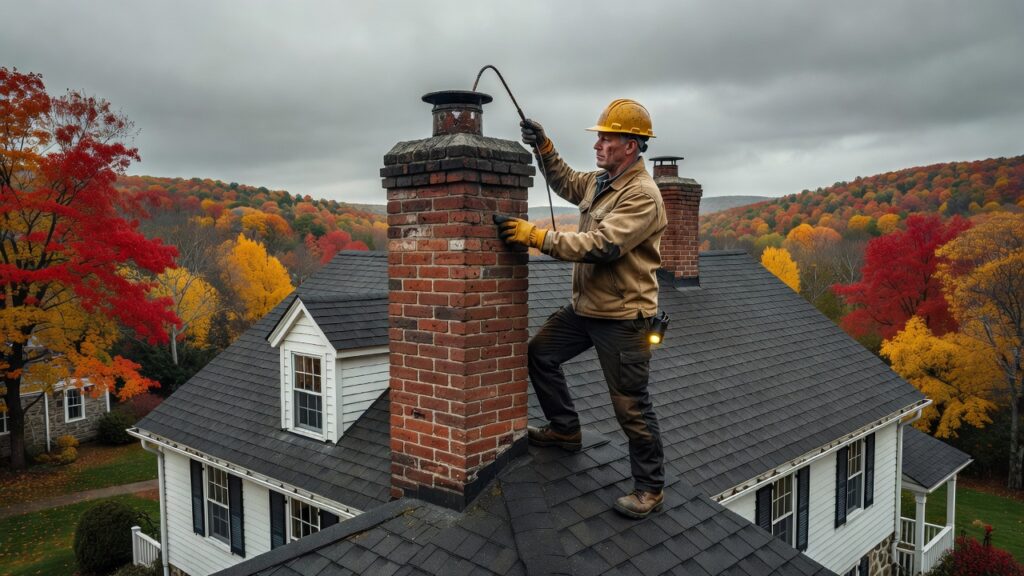
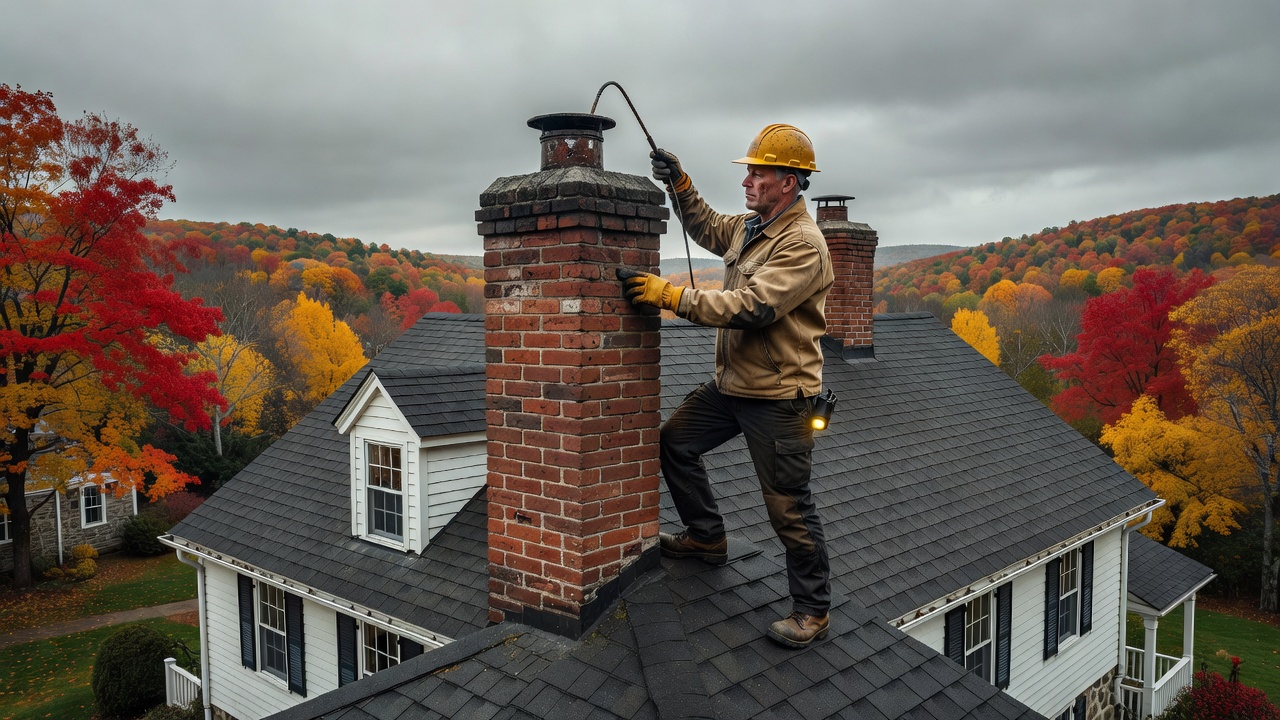
Chimney Repair CT: Keeping Newtown Homes Safe from the Flue Up
Chimney repair CT refers to the professional diagnosis and correction of structural, masonry, and liner problems in Connecticut chimneys work that directly affects whether combustion gases stay in the flue or migrate into your living space. In Newtown, where wood-burning fireplaces are common in older colonials along Huntingtown Road and the newer builds off Route 25, a damaged chimney isn’t a cosmetic issue. It’s a fire and carbon-monoxide risk that gets worse with every freeze-thaw cycle Fairfield County delivers.
At Chimney Experts, we’ve repaired chimneys across Newtown’s varied housing stock, from 1780s center-chimney saltboxes to 1990s tract homes with prefabricated fireplace systems. The problems differ, but the standard is the same: the repair has to hold, and the flue has to perform safely.
Why Newtown chimneys deteriorate faster than homeowners expect
Connecticut averages around 30 freeze-thaw cycles per winter in inland Fairfield County towns like Newtown. Water enters tiny mortar cracks, freezes, expands, and forces the crack wider. By spring, what was a hairline joint is a gap wide enough to admit moisture into the flue tile. Brick spalling, efflorescence (those white mineral streaks on the exterior), and cracked or offset flue tiles are all signs that water has been working at the masonry for at least one or two seasons.
Older homes with clay-tile-lined flues face a particular issue: when a fireplace has been converted to gas and then back to wood, or used with an insert that wasn’t properly sized, the liner often shows stress fractures. A fractured tile liner isn’t something you can watch and wait on combustion gases can pass through a crack that’s invisible from the firebox.
What chimney repair CT work actually covers
Repair isn’t a single job. Depending on what the inspection finds, the work may include one or several of the following:
- Tuckpointing: removing deteriorated mortar to a minimum depth of 3/4 inch and repacking with type-S or type-N mortar matched to the existing masonry
- Spalled brick replacement: sourcing brick that matches the original in dimension and color, so the repair doesn’t look patched
- Crown repair or rebuild: the concrete crown that caps the top of the chimney stack is the first line of defense against water; cracks get sealed with a flexible crown coat, and failed crowns are rebuilt to the correct overhanging profile
- Flue liner repair: stainless-steel relining for chimneys where the clay tile is cracked, offset, or missing sections entirely
- Flashing repair: the sheet-metal seal where chimney meets roof; step flashing, counterflashing, and the sealant joint all degrade and are a leading cause of interior water damage
- Damper repair or replacement: a damper that doesn’t seal properly wastes heat and lets animals in; throat dampers can often be repaired, but many older Newtown homes benefit from a top-mount replacement
- Firebox repair: refractory mortar joints between firebox bricks take the direct heat load; once they erode past about 1/4 inch, the structural brick behind them is exposed to temperatures it wasn’t designed for
How we approach every repair job in Newtown
We don’t quote repairs from the driveway. Every job starts with a Level 2 inspection, which means a camera scan of the full flue from the firebox to the crown. That footage tells us exactly where liner damage is and how extensive it is, so we’re not guessing at scope and you’re not paying for work you don’t need.
Once we have the inspection data, we give you a written summary that describes each problem, explains the repair method, and states the cost. If we find a combination of issues — say, failed flashing plus a cracked crown plus two offset liner tiles — we walk through what’s urgent now and what can wait a season, so you can make a practical decision rather than an all-or-nothing one.
Materials matter. For tuckpointing, we use mortar mixed to match the compressive strength of the original, not a harder modern Portland mix that can actually accelerate brick deterioration over time. For relining, we use UL-listed stainless-steel liner systems sized to the appliance’s BTU output and flue height. We pull the relevant permits with the Town of Newtown Building Department when the scope requires it.
Local trust signals worth knowing
Chimney Experts is based in Newtown and serves Fairfield County. Our technicians are certified by the Chimney Safety Institute of America (CSIA). We carry liability insurance and workers’ compensation coverage, and we’re happy to provide certificates on request before work begins. We know Newtown’s building department and its permit process, which matters when a structural repair requires sign-off.
Newtown has a housing stock that spans several centuries, and we’ve worked on all of it the fieldstone foundations and triple-wythe brick chimneys in Sandy Hook, the mid-century ranches off Taunton Hill Road, and everything in between. That range of experience means we’re not retrofitting a one-size-fits-all solution onto your specific chimney.
Frequently asked questions about chimney repair in CT
My chimney is leaking but the flashing looks intact from outside. What else could be causing it?
In Connecticut, a common culprit is a cracked or improperly sloped crown. Water runs off a sound crown; it pools and seeps through a cracked one directly into the top of the flue. Porous brick face and failed mortar joints can also absorb enough rain during a northeast storm to produce interior staining even when the flashing is fine. A camera inspection and a physical check of the crown and upper courses usually pinpoints the source quickly.
How long does tuckpointing last on a Connecticut chimney?
Done correctly with the right mortar mix for the brick type, tuckpointing typically holds 20 to 30 years in Fairfield County’s climate. The main variables are mortar selection (too hard a mix spalls the brick face), joint depth (shallow tuckpointing fails faster), and whether water infiltration from the crown or flashing is still occurring. If the root cause of the moisture isn’t addressed, even quality tuckpointing won’t reach that lifespan.
Do I need a permit for chimney repair in Newtown, CT?
It depends on the scope. Cosmetic tuckpointing and crown sealing generally don’t require a permit. Full flue relining and structural firebox work typically do require a building permit from Newtown’s Building Department, and in some cases a separate mechanical permit. We handle the permit paperwork for jobs that need it, so you’re covered for insurance purposes and future home sales.
Schedule your chimney repair assessment in Newtown
If you’ve noticed spalling brick, a stained firebox ceiling, a damper that won’t seat properly, or water in the firebox after a rainstorm, those are signs the chimney needs attention before the next heating season. Repairs caught early are almost always less expensive and less disruptive than work deferred until the damage is structural.
Call Chimney Experts or use our online booking form to schedule a Level 2 inspection in Newtown. We’ll give you a clear picture of what’s going on, a written repair recommendation, and an honest timeline no pressure, no upselling work your chimney doesn’t need.
Call us today or book online to get your Newtown chimney inspected and repaired by CSIA-certified technicians who know Fairfield County chimneys.
Related from Chimney Experts: Chimney Sweep CT · Chimney Inspection CT · Chimney Repair in Brookfield, CT