Chimney Liner Installation CT: Protecting Newtown Homes Before Cold Weather Arrives
Chimney liner installation in CT means fitting a protective sleeve, typically stainless steel, cast-in-place, or clay tile, inside your chimney’s flue so that combustion gases travel safely out of the house and heat stays off the surrounding masonry. Without a sound liner, those gases and that heat have nowhere to go except into the walls and framing of your home. For Newtown homeowners, the window between early autumn and the first hard freeze is often the best time to discover a cracked or missing liner before the fireplace or furnace runs every day.
At Chimney Experts, we install and replace liners on wood-burning fireplaces, gas appliances, oil furnaces, and wood stoves throughout Newtown and the rest of Fairfield County. What follows is an honest look at the work: what we do, why certain materials make sense for specific appliances, and what a Newtown homeowner should expect from start to finish.
Why Newtown chimneys need liner attention more often than you’d expect
Much of Newtown was built during the mid-century building boom, and a significant number of homes on and around Route 25 and in the Sandy Hook neighborhood still have original clay tile liners. Clay tile works fine when the joints are intact, but Fairfield County winters put real stress on masonry. Freeze-thaw cycling cracks mortar joints, and those cracks let flue gases, including carbon monoxide, seep into living spaces. A CSIA Level 2 inspection is required any time a home changes hands or a heating appliance is replaced, and that’s when most liner problems in older Newtown homes come to light.
Beyond age, appliance changes are a common trigger. When a homeowner converts from an oil furnace to a high-efficiency gas unit, the new appliance produces cooler, wetter exhaust. That exhaust can condense inside an oversized clay flue, accelerating deterioration. Installing a correctly sized stainless steel liner, typically 4-inch or 5-inch diameter for most gas furnaces, solves the problem without any masonry demolition.
The liner options we install and when each one fits
Stainless steel flexible liners
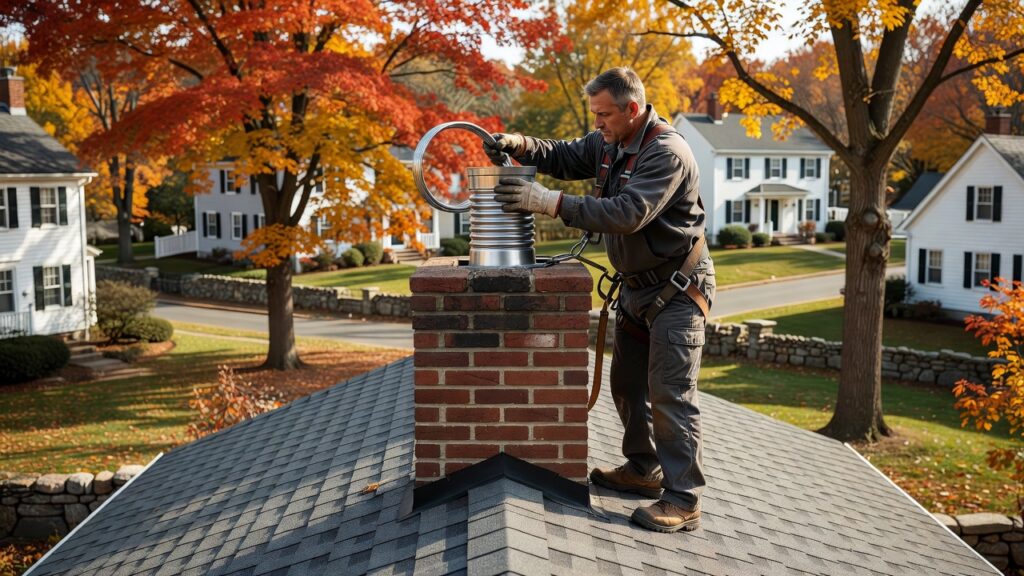
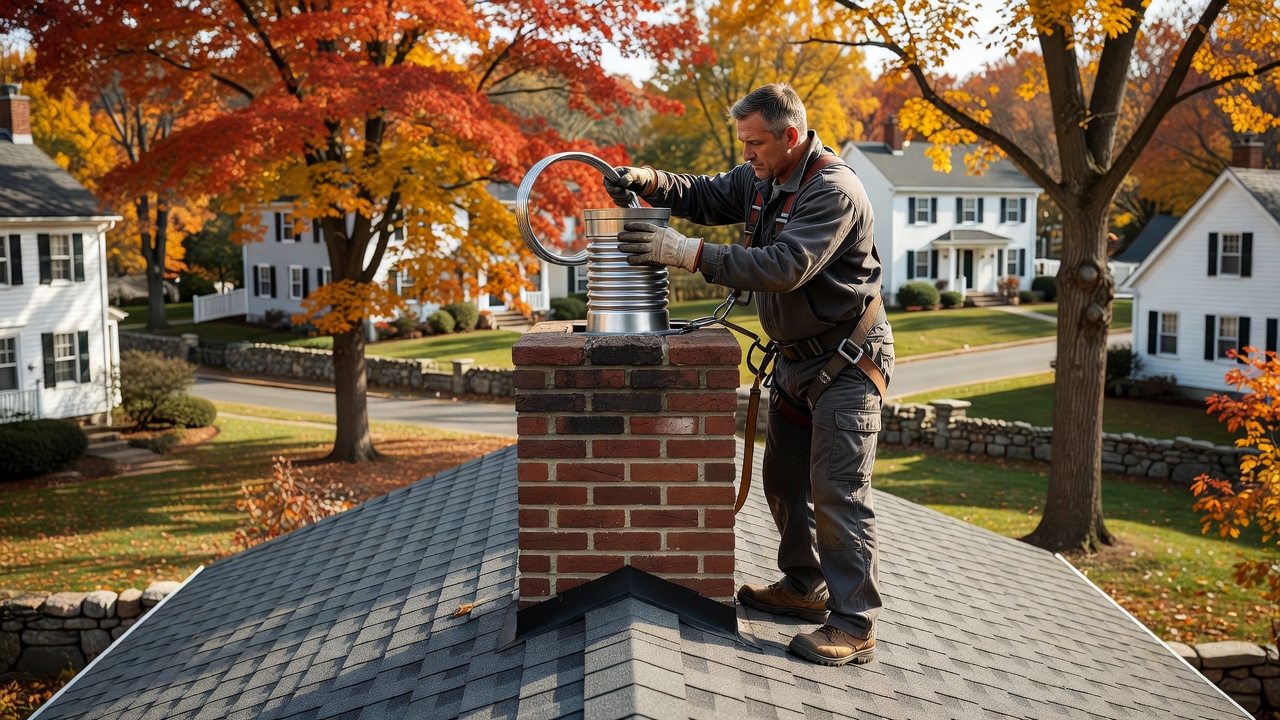
This is the most common installation we do in Newtown. A flexible 316-alloy stainless liner handles wood, gas, and oil appliances. It bends around slight offsets in older chimneys and drops into place in a single day. Most installations include a top plate, rain cap, and an insulating wrap that reduces creosote buildup by keeping flue temperatures higher on cold nights.
Rigid stainless liners
When the flue runs straight from bottom to top, common in newer construction, a rigid liner offers a smoother interior surface and a longer service life. It’s a better fit for high-output wood stoves where draft performance matters.
Cast-in-place liners
If the existing masonry has structural problems or the chimney serves multiple appliances, a poured refractory liner can restore a heavily deteriorated flue without rebuilding the entire chimney. The material bonds to the inside of the chimney and sets as a continuous, seamless tube. It’s more involved than a stainless installation and typically takes a day or two depending on chimney height, but it can save a chimney that would otherwise need to come down.
What our installation process looks like from the first call
We start with a camera inspection. Before any liner goes in, a technician runs a closed-circuit camera through the full length of the flue to document its condition, measure the internal dimensions, and identify any offsets. You’ll see the same footage we see, and we’ll tell you which liner type fits your appliance, your chimney geometry, and your budget.
Once you approve the work, we schedule the installation. For most stainless liner jobs in Newtown, that means one visit: the technician secures a drop cloth around the firebox, feeds the liner from the top of the chimney down to the appliance connection, sets the top plate and cap, connects the liner collar at the bottom, and applies high-temperature sealant at every joint. Before leaving, we do a smoke test to confirm the flue is drawing correctly and that there are no gaps.
At the end of the job you get written documentation of the liner specs, the installation date, and any warranty terms. That paperwork matters when you sell your home, buyers and their inspectors ask about it.
What’s included in a Chimney Experts liner installation
- Pre-installation camera inspection and flue measurement
- Liner material (stainless flexible, rigid, or cast-in-place) sized to your appliance
- Insulation wrap where code or appliance type requires it
- Stainless steel top plate and rain cap
- High-temperature sealant at all connections
- Post-installation smoke draft test
- Written installation record and manufacturer warranty documentation
Serving Newtown and Fairfield County with no surprises on the invoice
Chimney Experts is based locally and familiar with Fairfield County building department requirements. Newtown’s older housing stock, particularly the capes and colonials common along Pole Bridge Road and in Botsford, often has chimneys with unusual dimensions or multiple flues in one stack. We carry liner stock in common and less-common sizes so we’re not waiting on a supplier after the inspection reveals something unexpected.
We hold CSIA certification, carry full liability insurance, and quote in writing before any work begins. If the inspection shows your existing liner is in good shape, we’ll tell you that too.
Frequently asked questions about chimney liner installation in CT
How do I know if my Newtown home’s liner actually needs replacing versus just a repair?
A camera inspection answers this directly. Hairline cracks in clay tile can sometimes be sealed with a refractory repair product, but spalled tiles, collapsed sections, or missing mortar joints along the full liner typically call for a full replacement. If the damage is isolated to one or two joints, repair may be sufficient. We document exactly what the camera shows so you can make the decision with real information rather than guesswork.
Connecticut requires a permit for chimney liner installation, do you handle that?
Permit requirements in Connecticut depend on the municipality and the scope of work. Newtown’s building department may require a permit when a liner is installed in conjunction with a new appliance or a change in fuel type. We’re familiar with local requirements and will advise you during the estimate whether a permit applies to your specific job. We can pull the permit on your behalf in most cases.
How long does a stainless steel liner installation typically take in a standard Newtown colonial?
Most single-flue stainless liner installations take three to five hours from setup to cleanup. A two-story colonial with a straight flue and a standard wood-burning fireplace is on the shorter end. If the chimney has a significant offset, if we’re lining a flue for a furnace in the basement, or if the job involves a cast-in-place pour, plan for a full day or a return visit the following morning.
Schedule your liner inspection or installation today
If your fireplace or heating appliance hasn’t had a camera inspection recently, autumn is the right time to find out what’s inside that flue before it runs every night. Chimney Experts serves Newtown and all of Fairfield County. Call us or use the contact form to request an inspection and written estimate. We’ll show you the camera footage, explain your options, and get the work done before the cold sets in.
Related from Chimney Experts: Chimney Sweep CT · Chimney Repair CT · Chimney Inspection CT